As public perception shifts around data centers, states can build community trust by requiring hyperscalers to fund home upgrades, virtual power plants, and community solar—cutting bills for residents while unlocking the capacity the electric grid needs.
Constituents and elected leaders alike are increasingly worried about the impact of data centers in communities and on the electric grid.
Policymakers can build public support for hyperscalers by encouraging or requiring data centers to invest in community energy systems to help offset new electricity demand and lower costs for everyday customers.
Data center investment in home upgrades, virtual power plants, and community solar can help address energy affordability head on.
While some hyperscale companies are already making these investments, they need to scale them significantly to have impact.
Turning the Data Center Boom Into a Community Energy Win
Data centers are approaching communities with lofty promises of local economic development, new jobs, and billions in tax revenue. In some places, they have delivered. Construction jobs have picked up, creating new union training and recruitment opportunities at a time when the construction industry as a whole was at a lull. On top of that, estimates showed that adding new data center demand was actually causing electricity prices to go down in some regions.
But in recent months, the tide has shifted with public sentiment souring and concerns mounting on both sides of the aisle, as people increasingly question what it actually means to host a data center in their communities. There are worries about the amount of energy and water these facilities will need—will ratepayers be responsible for the share of power actually being used by a data center? Will these massive facilities overburden local water systems as they cool their servers?
Others are raising the alarm about the noise, light, and air pollution from the increased use of existing coal and gas electric power plants, new dedicated gas generators, and diesel back-up generators. And some communities fear an even worse scenario: a data center that never materializes after construction, leaving others to pick up the tab for stranded electric infrastructure that wasn’t actually needed.
All of this is happening against a backdrop of rising electricity bills and more climate pollution from new natural gas infrastructure. A June 2026 study projects that data center demand will drive electricity prices up by anywhere from 6% to 29% and estimates that 2030 power sector carbon pollution will rise by 28% compared to a future without this level of growth. Without the sufficiently rapid expansion of electric infrastructure, data center buildout poses direct risks to grid reliability—and if that new infrastructure isn’t clean, it will set the country back on our science-backed climate goals.
State and local leaders are scrambling as data center regulation and guardrails struggle to keep up with growing pressure on communities and the electric grid. Large load tariffs are a meaningful first step in protecting ratepayers from rising costs, and data center flexibility—the ability to curtail or reduce energy use during periods of peak demand—will help free up additional capacity on the system today. Solutions like these matter in the near-term.
But as bills climb and communities continue to lack real transparency or input into the data center buildout, policymakers need solutions that turn this into a genuine community benefit—and a real social license for hyperscalers.
Investing in Community Energy Systems
Some states have taken early steps by taxing data centers and investing the revenue in community energy funds, which can help bolster local energy programs or projects. Minnesota’s data center package (HF 16), for example, asks data centers to contribute to a state-managed housing weatherization account. It’s a start, but a modest one—a drop in the bucket relative to the scale of hyperscaler investment flowing into these facilities.
State policymakers and regulators are uniquely positioned to take this further by requiring hyperscalers to directly fund community energy systems to mitigate their grid impacts. States should actively encourage data center companies to invest in home upgrades, virtual power plant programs, and community solar.
Upgrades for Homes
An approach that can directly serve the community is for hyperscalers to fund home upgrades that use less energy or produce their own clean energy. This is a win-win solution—households save on their energy bills, and data centers quickly get the capacity they need.
A 2025 report from Rewiring America estimates that home upgrades—like electrification, solar, and storage—could offset all 93 GW of projected data center demand in the U.S. through 2029 by reducing peak demand on the system. Replacing inefficient electric heaters, water heaters, and air conditioning with heat pumps in 21 million American homes alone could create 30 GW of new capacity, meeting nearly a third of projected data center demand. These households would benefit from greater comfort and resiliency, while saving an average of $740 per year on electric bills.
“The data centers currently planned or already under construction across the country would add a total of 93 GW of electricity demand to the grid by 2029.”
Rewiring America
Homegrown Energy Report
These projections are lofty and would require upgrading all inefficient homes to heat pumps. Based on Rewiring’s estimates, fully funding the modeled upgrades at a 50% cost share would require roughly $189 billion in hyperscaler investment. That’s a large upfront investment, but even a partial fulfillment of this strategy could deliver substantial grid and affordability benefits.
States and localities are also starting to see the potential benefits programs like this could offer for everyday households, renters, and low- to moderate-income customers. New York legislators have proposed the Homegrown Energy Act (A9297), which would require hyperscale data centers to offset a portion of their electricity demand by funding household electrification measures, prioritizing low- to moderate-income households. Google is already moving in this direction: in LaGrange, Georgia and West Memphis, Arkansas, it invested $26 million to help income-qualified households cover home repairs, energy efficiency, and weatherization upgrades at no cost.
While these upfront investments are substantial, state policymakers should set far more aggressive revenue targets for home upgrades to more meaningfully help with peak load. These companies can afford to do this—and with eroding public support for data centers, they arguably can’t afford not to. Households would receive the direct benefits, locking in big savings for years to come. The political ground is there: 73% of Americans support requiring hyperscalers to fund home upgrades.
Leveraging Virtual Power Plant Programs
Now what if you can take these home upgrades a step further? Increasingly, companies, utilities, and grid operators are looking to leverage the small-scale energy technologies that are already in people’s homes and businesses to provide more flexibility on the grid. With data centers putting excessive pressure on an aging system, some hyperscalers are looking to invest in virtual power plants to offset some of their demand and create new readily available capacity—and policymakers should push to make this standard expected practice.
A virtual power plant (VPP) is the remote or “virtual” aggregation of thousands of DERs—like rooftop solar and batteries, electric vehicle charging infrastructure, smart thermostats and appliances, and heat pumps—used to balance electricity supply and demand like a traditional power plant. Usually, these resources are deployed during periods of peak demand or grid constraint.
VPP company Voltus is one of the leading companies proposing new VPP frameworks that could work for data centers. Earlier this year, they announced a first-of-its-kind Bring Your Own Capacity agreement with Google—a bilateral contract that would allow Google to fund Voltus’ VPP programs within PJM Interconnection, the nation’s largest grid operator, unlocking 100 MW of flexible capacity annually. Voltus will tap residential and commercial devices across the region, and customers will get paid. This arrangement will also help offset the rapidly growing costs data center demand is creating for PJM over the next three years alone.
In September 2026, a new Bay Area partnership was announced, bringing together hyperscalers, VPP companies, the electric utility PG&E, and Rewiring America to enroll nearly 21,000 existing devices in a new VPP program, with private capital funding new electrification upgrades. It’s the first program to combine existing and new technology under one framework to deliver more grid reliability and flexibility. And to the extent private investment drives grid benefits, ratepayers pocket the savings.
Both approaches should be scaled across the U.S. Data center companies should be proactively pursuing such arrangements, and state policymakers should nudge them to do so.
A separate community organization-backed VPP framework offers another path: a community benefit agreement, negotiated between a developer and a local government, requiring a certain percentage of data center revenue to flow into a similar state-managed community energy fund. That fund can then pay for home upgrades (battery and solar, battery and heat pumps, etc.) across a city or region, and those technologies are then enrolled into a third-party managed VPP program.
This framework is gaining traction in several states and could be a jumping-off point for VPPs to really flourish at the state level—all backed by data center funding.
Investments in Community Solar
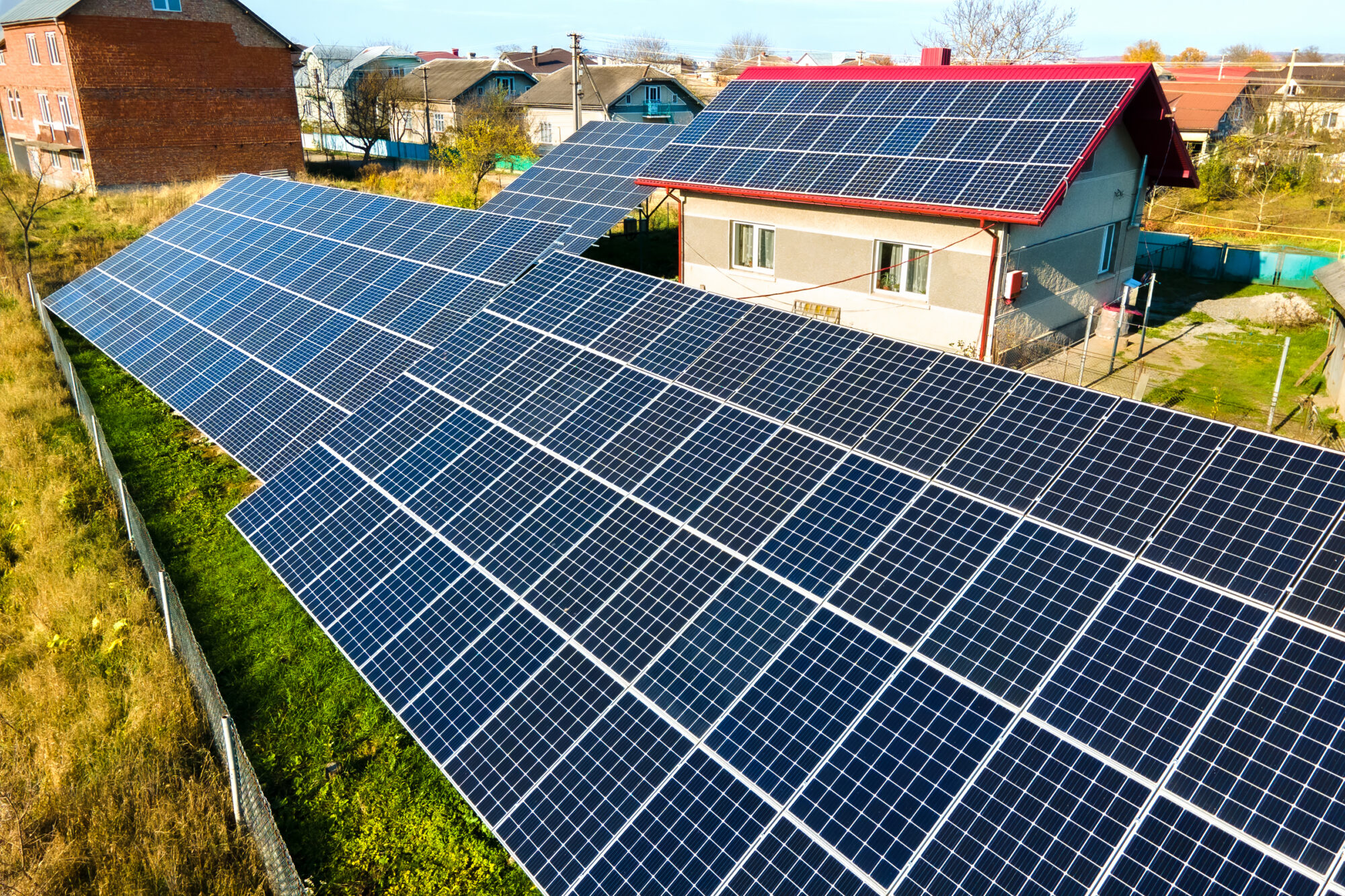
A less-explored but promising approach is directing a portion of data center clean energy spending toward community solar. Community solar projects allow households, including those who might not otherwise be able to install solar, to subscribe to a shared solar installation and receive bill credits for the power it generates. It’s one of the most accessible clean energy options for households facing high energy burdens.
Data center investment in community solar, which provides homeowners and renters equal access to the benefits of solar energy generation regardless of the physical attributes or ownership of their home, can help address energy affordability head on.
A June 2026 Brattle report examining community-based demand-side investments by hyperscalers in Atlanta, Memphis, Kansas City, Missouri, and Columbus, Ohio found that investments in community solar paired with storage can deliver the largest bill savings and the most reliable capacity among the strategies studied. In Atlanta, for example, their model shows that roughly $2 billion in hyperscaler investment in community solar and storage could bring 115,000 customers into the program, each saving close to $800 per year on their bills—benefits that would largely flow to low-income participants.
Critically, the study also found that hyperscaler investments would be additive rather than competing with existing utility programs.
This is a real opportunity that no state has yet seized. Large-scale data center companies could directly finance community solar projects across a region, through utility-owned or third-party-developed projects, and deliver lasting affordability benefits to the communities hosting them.
A Path to Shared Benefits
As policymakers work to manage data center growth and protect ratepayers, some of the most powerful solutions are closer than they might think—in people’s homes, on rooftops, and in community solar projects. Tech companies have a real opportunity to earn goodwill with communities across the U.S. by directly investing in the strategies and community energy systems that lower costs for everyone. Policymakers assessing what guardrails data centers need to protect ratepayers shouldn’t overlook community energy investment—it’s one of the most direct levers available to turn this infrastructure boom into a genuine win for constituents.