As Americans struggle with the skyrocketing cost of living and worsening impacts of climate change, state leaders face the daunting task of tackling multiple crises at once. Fortunately, the technological and policy solutions are already at hand. With these common-sense actions, we can cut costs and pollution at the same time, delivering benefits for consumers and the climate alike. This memo outlines the critical opportunity for state-level decision-makers, including legislators, governors, and regulators, to advance smart policies that deliver economic relief and address climate change through cheap, clean power, efficient buildings, and affordable, accessible transportation.
Clean Energy is Cheap EnergyClean Energy is Cheap Energy Pursue near-term solutions to provide immediate relief on household electricity bills, as well as longer-term reforms to deploy clean energy and modernize the grid.
Abundant, Efficient, and Affordable HomesAbundant, Efficient, and Affordable Homes Build more homes at prices more people can afford, make new homes energy efficient, provide financial support for home upgrades, stop wasting money on outdated gas infrastructure, and set fair electricity rates that align with affordability and climate goals.
Clean Transportation ChoicesClean Transportation Choices Expand self-funded EV incentives and financing support, expand EV charging infrastructure, modernize building codes for EV readiness, put in place measures specifically targeting medium and heavy vehicles, and set electricity rates to reward flexible charging and peak-time grid support.
Affordable, Clean, Reliable American Energy: A Guide for States
Electricity bills are rising across the country, and families are struggling to keep up. In the last year alone, residential electricity rates have increased by a national average of 10.2% and as much as 20% in some states, according to 2026 data from the Energy Information Administration. With massive artificial intelligence (AI) data centers increasing electricity demand and natural gas prices remaining high, costs show no sign of easing. Meanwhile, the worsening impacts of climate change—from wildfires to heat waves to hurricanes—are piling additional costs on Americans nationwide.
State leaders have an opportunity to address both issues at once. By advancing near-term rate relief alongside longer-term reforms, they can provide immediate help while driving a systemic shift toward a modernized clean energy grid that will keep costs down for the long run.
Affordability solutions should not include cuts to energy-efficiency programs that would actually increase long-term costs. Nor should they extend the lives of costly, aging coal plants or build unnecessary new gas plants that lock ratepayers into expensive, volatile fossil fuels while worsening climate impacts. High and volatile natural gas prices are among the leading causes of skyrocketing energy bills right now.
We should not double down on fossil fuels at a time of geopolitical uncertainty—especially when homegrown clean energy is cheaper and faster to build.
1. Near-term Ratepayer Relief
While deeper reforms are needed to address the underlying causes of higher electricity prices, there are several solutions policymakers can pursue now to provide immediate relief on household electricity bills.
Big Tech companies are developing large, hyperscale data centers around the country to power their AI operations, requiring massive amounts of power very quickly. In places without excess capacity, the resulting demand spike can raise prices dramatically. At the same time, as with other forms of electrification, data centers can actually reduce electricity prices if they lead to greater utilization of systems with excess capacity. Thus, it is crucial to get the details right, with good strategic placement and proper guardrails.
The 13 mid-Atlantic and Midwestern states (and Washington, D.C.) served by PJM Interconnection, the regional grid operator, have seen a particularly high number of data centers, with over 25% of U.S. hyperscale data centers in Virginia alone. Electricity rates have already risen 38% in the last two years alone (37.8% in Washington, D.C., from April 2024 to April 2026), providing a striking cautionary example of what happens when data centers aren’t done right.
Large Load Tariffs
Many states have responded to data centers by creating large load tariffs—utility rates designed specifically for “large loads” such as data centers. As of March 31, 2026, public utility commissions in 37 states and at least 18 state legislatures have approved or considered a large load tariff for at least one utility. These tariffs should be designed so that data centers are responsible for paying all costs to our electric system they cause, ensuring other ratepayers aren’t asked to foot their bill. They should also include long-term (15-year or more) contracting requirements and exit fees, so that other customers aren’t left holding the bag if data centers don’t materialize or close early.
State Profile: OREGON
In 2025, Oregon passed HB 3546, the POWER Act, which protects utility customers from data center costs. The bill requires the state’s Public Utility Commission (PUC) to create a separate rate class for large energy users over 20 megawatts (MW), and requires data centers to sign contracts for at least 10 years. In line with this legislation, the commission is currently considering a proposal to increase rates for data centers by 29%, while decreasing rates for other ratepayers. The bill also encourages data centers to procure clean energy or other resources that reduce greenhouse gas emissions consistent with state policy.
Bring Your Own New Clean Energy
However, large load tariffs don’t address energy generation costs. To address this issue, some states and regions are considering requiring data centers to “bring your own new clean energy,” or BYONCE. By requiring data centers to procure their own capacity, market prices for all utility customers should not increase significantly.
In places operating near capacity, this energy supply must be additional—so data centers don’t divert existing power and impose replacement costs onto other customers—and it must be clean. It should also include paying for distributed energy resources (discussed further in the section on buildings below). States with clean energy laws must design policy to ensure that data centers comply with those requirements, but all states should require clean energy so that data centers don’t generate new gas and diesel pollution. States with data center tax incentives should consider conditioning those tax credits on BYONCE requirements.
“Polling shows that voters care deeply about how data centers are powered: Net local approval rises from -9% to +31% when data centers use clean energy.”
Global Strategy Group
America is All In
Transmission Costs
State and regional grid operators must also allocate transmission costs to the data center projects that drive their need, rather than to household customers. Even in states with large load tariffs, the regional transmission costs are still broadly passed on to all customers. PJM recently approved $11.8 billion in transmission investments—mostly for data center projects in Virginia—and allocated the costs across all states and customer classes.
Additionally, upgrading existing transmission infrastructure with advanced transmission technologies (ATTs) can unlock additional transmission capacity more quickly and help defer large capital investments for new transmission—the cost of which would be passed on to ratepayers. As data center companies explore solutions to cover the up-front cost of upgrading existing lines using ATTs, states across the country should encourage this as a cost-effective, near-term solution to help manage demand.
Data Center Flexibility
“Demand response” programs allow energy users to voluntarily reduce their electricity use during periods of high demand or grid stress. Increasingly, researchers have found that if data centers reduced their energy use during peak hours—allowing for greater flexibility—this could lower capital expenditures by anywhere from $40 billion to $150 billion over the next 10 years. This could mean significant avoided costs for both data centers and ratepayers. It could also result in less reliance on new natural gas power plants.
State policymakers and regulators can encourage hyperscalers to embrace data center flexibility to lower costs and transition to more renewable energy resources.
Separately, we are starting to see large load users look to demand aggregation and virtual power plants to automatically discharge energy from local, customer-centered resources—such as smart thermostats—into the system when data center demand spikes. Customers can get paid for their participation in the VPP, which will help offset data center load and maximize efficiency on the electric grid.
1b. Reduce Exorbitant Utility Profits
While families and small businesses struggle with higher power bills, many monopoly utilities are posting record profits and paying executives massive salaries. On average, 15 cents of every dollar households pay on their electric bills goes directly to utility profit margins—regardless of actual performance on reliability, affordability, or any other metric, because monopoly utilities receive a guaranteed rate of return on equity, sometimes at 10% or more.
Several states are looking to rein in these excessive returns. Lowering utility return on equity (ROE) by just two percentage points—say, from 10% to 8%—could reduce the average household’s annual utility bill by approximately $100.
The Federal Energy Regulatory Commission (FERC) also provides utilities with a 0.5% ROE “adder” for maintaining membership in a regional transmission organization (RTO) such as PJM or the Midcontinent Independent System Operator (MISO). While this incentive might have made sense when RTOs were new, it now boosts utility profits—and adds customer costs—year after year with no new benefit. Many states have urged FERC to eliminate this bonus. In fact, a recent Sixth Circuit decision makes clear that states have full authority to require their utilities to join RTOs—and to forgo the 0.5% adder—as Ohio and Maryland have recently done.
$100The approximate amount that the average household can save on their annual utility bill if the utility return on equity (ROE) was lowered by just two percentage points—say, from 10% to 8%.
State Profile: ILLINOIS
Illinois leads the nation in addressing high ROE by utilizing formulas that tie ROE to Treasury yields. The Illinois Commerce Commission set ROE levels for the utilities Ameren and Commonwealth Edison at 8.72% and 8.91%, respectively—among the lowest in the country, though likely still above utilities’ private cost of capital. Illinois also implemented performance incentive mechanisms that adjust ROE by up to 0.5% based on utility performance.
1c. Leverage Financial Tools to Keep Bills Down
Many state leaders are exploring ways to deliver immediate relief to ratepayers: Sending checks, creating direct-bill rebates, exploring funding sources to “freeze” rates at current levels, and expanding low-income bill assistance programs.
Electricity rates are often highly regressive—low- and moderate-income families pay a much larger share of their income on electricity than wealthier households. Rate increases hit these families the hardest. But some relief mechanisms are more effective than others. States that have cut energy efficiency or clean energy programs for short-term relief, for example, are increasing long-term costs. While energy efficiency programs appear as a line item on bills, they more than pay for themselves by deferring the need for grid upgrades and expensive new generation—even for customers who don’t directly reduce their own energy use.
States exploring bill rebates or rate freezes should find a sustainable funding source without cutting existing energy efficiency or clean energy programs. One option is to charge data centers a community benefit or rate-relief fee, ensuring that residential customers are reimbursed for higher rates driven by data center demand.
One common-sense solution is to expand low- and moderate-income bill assistance programs, which are often significantly undersubscribed. States should boost participation through automatic enrollment in bill assistance programs and expanded targeted outreach. These programs often pay for themselves and reduce costs for all customers.
Direct, immediate rate relief can be appealing and popular. But it must not come at the expense of energy efficiency, clean energy, or cost-effective grid investments—we need more of these, not less, to hold costs down over the long run.
2. Longer-term Reforms to Deploy Clean Energy and Modernize the Grid
Deeper reforms are needed to address the root causes of higher electricity costs. That includes skyrocketing energy demand, slow-moving approvals for clean energy projects, overreliance on volatile natural gas that leaves customers exposed to price shocks from foreign wars and geopolitical instability, regulatory structures that reward overspending rather than performance, and aging infrastructure stressed by climate-driven disasters.
To meet new demand without spiking costs, new supply must come online quickly. The cheapest and fastest-to-build power available is clean energy. Solar, wind, and battery storage projects can be built in a fraction of the time required for large-scale fossil plants, and at lower cost.
Speeding Up Siting and Permitting
States should expedite siting and permitting of new clean energy projects. In states with patchwork local siting processes, moving authority to a single state-level agency would provide more regulatory certainty and efficiency for clean energy, storage, and transmission projects. States could also create “shot clocks” requiring permitting decisions to be made within six or 12 months.
Many distributed energy resources, such as rooftop solar projects and home batteries, fall entirely within state jurisdiction. Regulators can require utilities to approve and connect these projects more quickly, pursue automatic or streamlined permitting, and standardize interconnection processes. But there is room for improvement almost everywhere.
State Profile: MICHIGAN
In 2023, as part of a comprehensive clean energy package, Michigan passed Public Act 233 to simplify siting and permitting for clean energy and storage projects. These reforms allow projects to receive a single permit decision from the Public Service Commission within one year, replacing a patchwork of approvals from local governments. The broader package also increases utilities’ energy-efficiency standards, requires 100% clean power by 2040, sets utilities’ storage procurement targets, raises distributed-generation utility caps, speeds up grid connections, and reforms utility IRPs. These reforms were projected to lower customer energy bills by about $300 per year by 2030.
Expediting Interconnection
Thousands of grid-scale clean energy projects are stuck waiting in line for approval to connect to the electric grid—a process that includes studying a potential project and determining if grid updates are needed and can take four to five years. These approval queues are run by regional grid operators (called RTOs) in much of the country or by utilities where no RTO exists, and are regulated by FERC at the federal level. RTOs and utilities need to move faster by dedicating more resources, implementing FERC’s Order 2023 interconnection reforms, and using AI and software to automate studies. States must push them to do so. States that run their own power procurement processes can go further by fast-tracking solar, wind, and battery projects that already have grid approval (either an existing interconnection agreement or access to supplemental interconnection), or even run fast-track procurements specifically for those projects.
Creating Virtual Power Plant Programs
States should also create virtual power plant programs that aggregate distributed resources to meet grid-wide demand—and compensate households accordingly. This puts downward pressure on bills in the near term. States can also expand low-income solar programs or energy efficiency funds to expand the number of available distributed resources, as small-scale projects can be built much faster than grid-scale ones.
State Profile: COLORADO
In 2024, Colorado passed SB24-218, a virtual power plant bill that requires utilities to establish VPP programs to compensate customers for sending power back to the grid or reducing demand. This program leverages existing batteries, rooftop solar, and demand flexibility to defer the need for costly new grid-scale generation or infrastructure.
Meeting Rising Demand with Energy Efficiency
States can also increase energy-efficiency resource standards (EERS), which set annual efficiency savings requirements for utilities and have been among the most effective policies for improving efficiency. The cheapest electricity, after all, is the electricity you don’t need to generate.
2b. Overhaul Broken Utility Incentive Structures with Regulatory Reform
Utility financial incentives often reward the wrong things. Most companies earn more by performing better. Monopoly utilities, on the other hand, face no competition and instead have their revenue set by regulators. This is currently based largely on what they spend, creating incentives for overspending, poor reliability, and bias against cost-saving measures such as energy efficiency, clean energy, and ATTs.
Performance-Based Regulation
States are uniquely positioned to fix this—and they should overhaul these standards that govern utilities to make it easier, not harder, to build a cheap, clean energy system. For example, performance-based regulation (PBR) ties revenue to actual performance on metrics like outage frequency, pollution reduction, new technology deployment, or cost containment. At least 17 state legislatures and D.C. have already authorized their utility regulators to implement some form of PBR. Whether PBR actually leads to bill reductions and better performance depends largely on the details, so states should carefully consider program design and include cost guardrails.
Utilities currently pass through the cost of fuels directly to customers. This means that a utility can overinvest in natural gas without bearing any financial risk if natural gas prices rise. States can end fuel cost-sharing so that customers don’t bear all the fuel cost risk.
Advanced Transmission Technologies
One underused cost-saving opportunity is getting more out of existing grid infrastructure. Advanced transmission technologies (ATTs), also called grid-enhancing technologies (GETs), allow more power to flow through existing lines at a lower cost than building new ones. These software and monitoring tools—such as advanced conductors that can carry more electricity without overheating—squeeze more capacity out of existing infrastructure. But because utilities earn more from capital spending, they are less incentivized to adopt them widely. In recent years, at least 18 states have passed ATT mandates, incentives, or studies to reduce transmission costs and maximize system efficiency, and more should follow suit. State utility regulators should also closely scrutinize supplemental transmission projects for cost-effectiveness.
State Profile: COLORADO
In 2026, Colorado passed HB26-1081, requiring utilities to analyze ATTs in their long-term transmission plans—getting more capacity out of existing lines and corridors at a lower cost than building new ones in new rights of way.
Lowest-cost Planning
States can also require lowest-cost planning. Integrated resource plans (IRPs), for example, allow state regulators to scrutinize utilities’ generation plans to ensure they meet demand at the lowest cost and consider all technologies fairly—including low-cost renewables. States can also require utilities to conduct integrated distribution system planning that better accounts for new technologies like solar, storage, electric vehicles (EVs), and non-wire alternatives when planning distribution system upgrades.
Innovative Financing Tools
Finally, states should consider innovative financing tools to lower costs. Financing transmission lines with lower-cost public debt or securitizing stranded assets can reduce the portion of capital expenditures subject to utilities’ high ROE—which can otherwise cost ratepayers twice as much.
2c. Take Natural Disaster Costs Out of Electric Bills
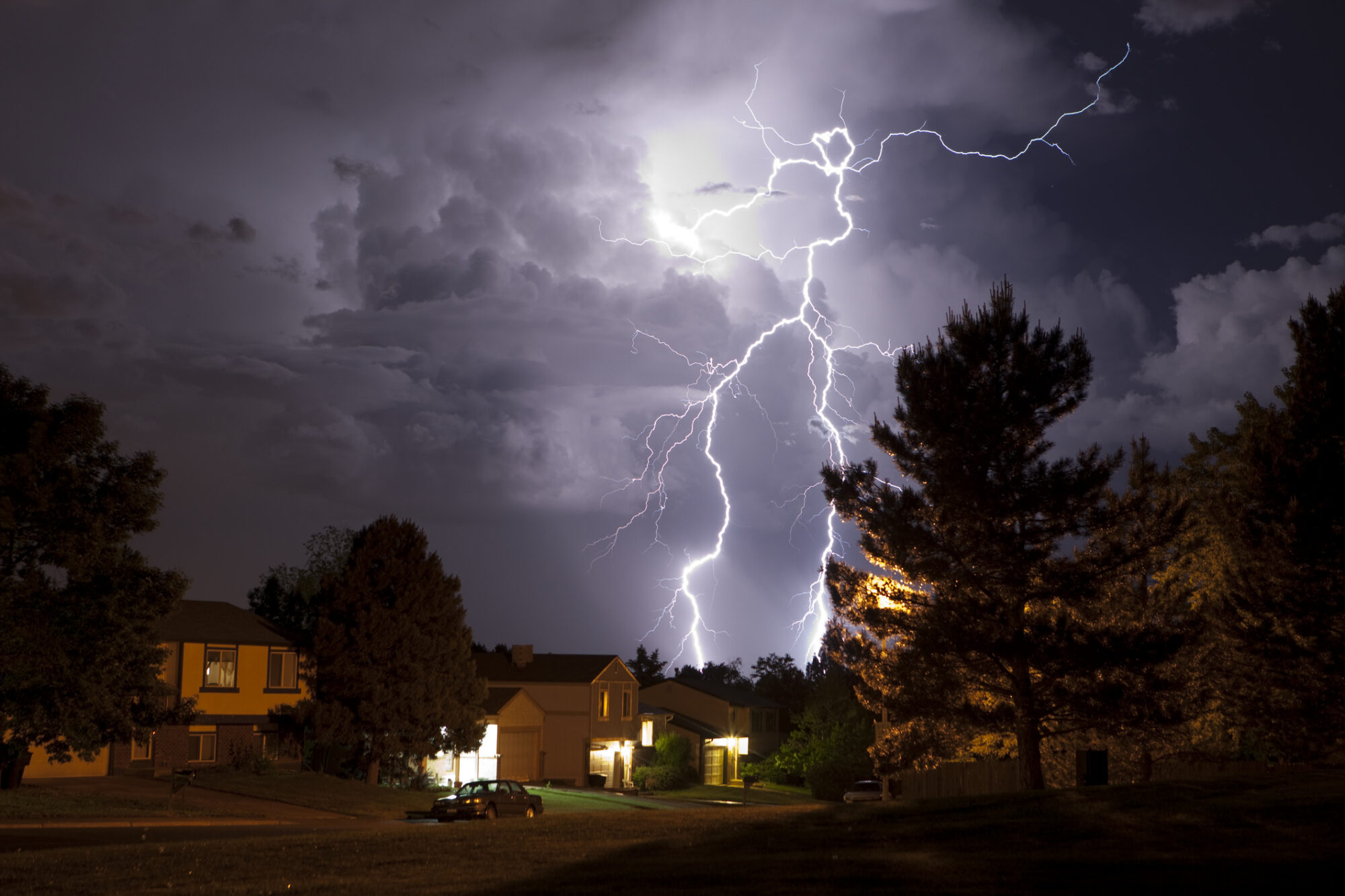
When a storm destroys power infrastructure, the repair costs are often charged to all ratepayers. But utility rates are regressive, and as climate change increases the severity and frequency of disasters, pushing preparedness and recovery costs onto electric bills will become increasingly untenable and unpopular. And it will discourage the electrification we need to reduce climate pollution from transportation, heating, and industry, which is making disasters worse in the first place.
In the long run, decision-makers should remove natural disaster costs from electric bills and instead fund them through the tax base and other sources. Taxes scale with income; utility bills don’t. While this shift will likely require significant support from the federal government, decision-makers at all levels should begin exploring and socializing funding mechanisms for disaster response that don’t require ratepayers to foot the bill. For past disasters—like California wildfires that have already wrecked utility finances and raised bills—states can look to securitization and innovative debt financing. One additional funding source that states could look to: The fossil fuel industry. Making polluters pay for climate-driven disasters is a common-sense way to assess costs to companies causing them.
Image: milehightraveler via Getty Images
Abundant, Efficient, and Affordable Homes
One of the largest drivers of the affordability crisis is the combined cost of housing and utility bills. Forty-two million U.S. families spend more than 30% of their income on housing. For one out of every four renters, it’s more than 50%. This unacceptable burden is pushing families into debt and dragging down the economy.
Every family deserves a healthy, resilient, energy-efficient home they can afford. With the right policies, state and local leaders can lower both housing and energy costs while reducing pollution that drives costly medical bills. Choosing between affordability and climate action is a false choice—we need more affordable, efficient, and healthy homes.
42M
U.S. families spend more than 30% of income on housing
1 in 4
renters spend more than half their income on housing
4-7M
homes short of what the country needs
11M
new homes needed by 2035 to meet projected demand
States should advance the following policy solutions that accomplish both:
Build more homes at prices more people can afford.
Make new homes efficient, resilient, and grid-interactive.
Provide financial support for home upgrades.
Stop wasting money on outdated gas infrastructure.
Set fair electricity rates that align with affordability and climate goals.
1. Build More Homes at Prices More People Can Afford
Housing in the U.S. is unaffordable primarily because there aren’t enough homes. The country is short four to seven million homes due in part to a construction slowdown over the past two decades, leaving a growing population competing for fewer homes and driving up prices and rents. The U.S. needs to build 11 million new homes in the next decade to keep up with demand, or community members like teachers, childcare providers, and service workers will continue to struggle to find affordable homes near where they work.
State and local governments must make it easier to build more homes at prices people can afford—such as townhomes, duplexes, triplexes, fourplexes, and accessory dwelling units (ADUs)—and allow the conversion of basements and garages into apartments for family or neighbors to rent. Diversifying and expanding the housing stock will lower rents for everyone and give more people a chance to own homes and build economic stability. Those homes can come in the form of new construction or expanding the number of homes in existing buildings.
The country also needs to build housing where it’s needed most—in connected communities where people can get to work, school, the grocery store, and the doctor’s office without long, expensive commutes. That means building more homes near jobs and transit, which reduces commute times and transportation costs and improves happiness and well-being. More homes in existing neighborhoods would also cut pollution as much as if 50% of the country’s vehicle sales were EVs by 2035.
As we upgrade and build more housing, we also need to address the risk of displacement by protecting existing residents from rent spikes and evictions, and by offering options for people to stay in their homes and neighborhoods. Numerous policy options exist to help preserve access to affordable housing and protect against displacement.
1a. Update Zoning to Legalize Homes of All Shapes and Sizes In Existing Neighborhoods
Currently, it is illegal to build anything other than a single detached home on three-quarters of all residential land nationwide. States should require local governments to update zoning to automatically allow homes of all shapes and sizes in existing neighborhoods. This will cut construction costs and give people more home choices they can afford (e.g., ADUs, duplexes, townhomes, small apartments, cottages, and other affordable home options).
State Profile: OREGON
Oregon was the first state to ban single-family zoning with HB2001 in 2019. The law requires medium-sized cities to allow duplexes on all residential properties, and cities of 25,000 or more to permit duplexes, triplexes, fourplexes, cottage clusters, and townhomes in all residential areas.
1b. Remove Costly Parking Mandates
Minimum parking mandates raise monthly housing costs by $200 to $500 and total construction costs by an average of $50,000 per home. Eliminating or reducing them can boost homebuilding by up to 70%. Fourteen states and hundreds of U.S. cities have already passed parking reforms, generating hundreds of millions in savings and increased tax revenues as excess parking land is converted to housing and commercial use.
State Profile: MONTANA
Starting in October of 2026, Montana’s HB 492 will cap parking mandates in cities with over 5,000 people at one space per unit, and 0.5 spaces per unit for homes under 1,200 square feet. Deed-restricted affordable housing, assisted living homes, and registered childcare facilities are fully exempt.
Image: Cavan Images via Getty Images
1c. Build Housing Where Mobility Options are Strong
2. Make New Homes Efficient, Resilient, and Grid-interactive
New homes should be efficient and resilient from the start—it’s cheaper and better for everyone. Plus, homes that are grid-interactive—meaning they can reduce their energy use or even supply energy back to the grid during periods of high energy demand—can make our energy system more dynamic and resilient while lowering energy costs for everyone.
Modern building codes protect buyers and renters by ensuring homes meet reasonable efficiency standards, buffering them from rising energy prices. All-electric homes are actually cheaper to build—by $7,500 to $8,200—and protect buyers from high gas bills and costly future retrofits.
Modern energy codes are also proven to save lives during extreme heat. Data from the National Labs finds that updated energy codes could prevent up to 80% of deaths caused by extreme heat.
When efficient, grid-interactive homes—particularly those with heat pumps, rooftop solar, and storage—are networked asVPPs (see ”Creating Virtual Power Plant Programs” in the “Clean Energy is Cheap Energy” section for more information), they can provide critical capacity during peak loads and cut systemwide electricity generation costs by up to 20%.
2a. Require Updates to the Latest Model Energy Codes
New homes built to the most up-to-date model energy codes from the International Energy Conservation Code (IECC) can save households up to $15,000 over the life of the home. Any up-front costs are quickly recouped through lower utility bills, especially in multifamily buildings. And importantly, updated codes are fully compatible with increasing housing supply and don’t push housing development toward places with weaker codes.
State Profiles: RHODE ISLAND, NEW YORK, AND ILLINOIS
Rhode Island, New York, and Illinois have all updated their energy codes to be based on the 2024 IECC, with nine more states using 2021 IECC codes. IECC’s model codes are well-vetted and serve as the standard codes used nationwide for residential buildings. These states move quickly because their statutes (Rhode Island, New York, Illinois) require timely updates. The 2021 codes deliver a 9.3% efficiency boost compared to 2018, and the 2024 codes add another 7.8% compared to 2021.
State Profile: COLORADO
Colorado has gone beyond the 2024 IECC codes with its recently enacted Model Low Energy and Carbon Code, which strongly encourages efficiency and electrification by fairly treating the energy savings of efficient electric heating through fuel debiasing.
2b. Adopt Stretch Codes and All-Electric Codes
States should promote all-electric buildings through codes that encourage or require electric readiness or full electrification, in either base codes or stretch/reach codes (optional codes that municipalities can adopt that exceed the base code). All-electric homes are cheaper to build and, in most cases, to operate than homes with fossil-fuel-powered appliances. Avoiding gas lines and building all-electric at the outset is far cheaper than retrofitting later, and with natural gas prices already volatile and expected to rise sharply in the coming years, all-electric homes offer more affordable, stable utility bills.
Avoiding gas lines at the outset of building a home is far cheaper than retrofitting with all-electric appliances later, especially with natural gas prices already volatile and expected to rise sharply in the coming years.
State Profile: MASSACHUSETTS
Massachusetts offers two additional levels of model codes beyond the IECC baseline. The “Stretch Code” has been adopted by 300 out of 351 cities and towns and requires greater energy efficiency. The “Specialized Code,” adopted by 60 cities and towns, strongly encourages all-electric design. Stretch Code adoption delivers $11,000 to $28,000 in up-front cost savings and $316 to $1,053 in annual bill savings.
State Profiles: NEW YORK AND CALIFORNIA
New York is the first state to adopt all-electric building codes, though the adoption has been put on hold pending litigation.
Title 24 of California’s Energy Code doesn’t mandate all-electric new construction but strongly incentivizes it by setting an energy-use standard based on high-efficiency heat pumps. Builders may choose gas heat but must offset the higher energy use with other efficiency measures, and all buildings must be wired to accommodate future electrification. Model code language is available for other states to adopt this approach.
2c. Support Virtual Power Plants and Grid-Interactive Homes
As noted above, grid-interactive homes can communicate with grid operators to reduce demand or even supply energy when the grid needs it most. Virtual power plants (VPPs) facilitate this by aggregating distributed energy resources (DERs) across participating homes and coordinating them with the grid. This lowers costs for both participating households, who are financially compensated through the VPP program, and all ratepayers by reducing systemwide costs. States should support VPP programs and update building codes and energy efficiency standards to encourage broader adoption of DERs in homes.
See state profile of Colorado’s SB24-218 under “Longer-term Reforms to Deploy Clean Energy and Modernize the Grid” in the “Clean Energy is Cheap Energy” section.
3. Provide Financial Support for Home Upgrades
More than 80% of homes would see utility bills fall if they installed a heat pump.
This is especially true for the more than one in five American homes heating with propane (4%), fuel oil (4%), and electric resistance heaters (14%). Households using delivered fuels can save an average of $970 per year, and those with electric resistance can save $1,530 per year by upgrading to modern heat pumps, which are two to four times more efficient than what they replace. For families in rural communities where propane and fuel oil use are common, this can deliver significant savings—and more money to help families and communities thrive.
For water heaters, the average home can save up to $230 per year by upgrading from a conventional water heater to a heat pump water heater, and up to $550 per year by switching from an electric resistance model. Upgrading homes that heat with electric resistance also reduces peak grid loads and frees up energy to meet growing demand.
While up-front costs remain high for some upgrades, states, municipalities, and utilities should provide incentives and work with manufacturers and contractors to bring them down. For example, in New England, the Heat Pump Accelerator program includes both incentives and workforce development to help bring prices down for consumers. States should also consider supporting home efficiency upgrades alongside appliance incentives to enable comprehensive whole-home retrofits.
Meeting the broad need for home upgrades requires steady, sufficient funding, and states should draw on every available source. States should maximize the use of existing funding sources such as the Low-income Home Energy Assistance Program, Weatherization Assistance Program, Home Energy Rebates Program, and Energy Efficiency Resource Standards (see “Meeting Rising Demand with Energy Efficiency” in “Clean Energy is Cheap Energy” for more on EERS). Unfortunately, those sources do not scale to meet the broader need, so states should also look toward other funding sources such as:
Rewiring America estimates that charging data centers to fund home efficiency and appliance upgrades could help 19 million U.S. households afford them. With the tidal wave of data centers planned or underway across the country, requiring Big Tech to foot the bill for cost-saving home upgrades presents a critical opportunity to reduce overall strain on the grid, largely driven by their demands.
State Profile: NEW YORK
New York’s proposed Homegrown Energy Act (A9297) would require hyperscale data centers to offset a portion of their electricity demand by funding household electrification measures, prioritizing low- and moderate-income households.
3b. Inclusive Utility Investment
Low-cost financing can help households make money-saving efficiency upgrades. Inclusive Utility Investment allows utilities to offer free or low-cost upgrades with no credit restrictions—meaning ratepayers face little or no upfront cost for appliances like heat pumps and repay the utility over time through the bill savings the upgrades generate. To keep such programs affordable, it’s important to limit utility return on financing for this type of program.
State Profile: NORTH CAROLINA
North Carolina’s Upgrade to $ave Program gives customers access to insulation, duct and air sealing, heat pump improvements, water heater wraps, and LED lighting with little or no up-front cost. Customers repay their utility bills over time, with the repayment more than offset by efficiency savings.
3c. Clean Heat Standards
Similar to a renewable portfolio standard, a clean heat standard requires gas, propane, and fuel oil providers to supply an ever-increasing share of clean heat—in practice, by subsidizing home insulation and heat pump upgrades. More clean heat from heat pumps reduces pollution—saving lives, reducing asthma rates, and cutting health care costs for everyone.
State Profile: COLORADO
In 2021, Colorado passed SB21-264, which requires regulated gas utilities to develop Clean Heat Plans to reduce climate pollution. The state’s Public Utilities Commission has since set a 41% emissions reduction requirement by 2035, which tripled rebates and incentives for customers when the plans took effect.
4. Stop Wasting Money on Outdated Gas Infrastructure
Rising utility bills are a significant driver of inflation, with household gas bills rising four times the rate of inflation in 2025. Some of this is due to expanding liquefied natural gas (LNG) exports, which are driving up wholesale gas costs. But a primary culprit is utilities padding profits and wasting money on gas pipe upgrades in a soon-to-be obsolete system. And it will only get worse.
“Gas utilities make money not from selling gas but from installing pipes—a perverse incentive to keep spending and profiting from a declining system.”
As more customers switch to heat pumps, fewer gas customers using less gas will be left paying to maintain aging gas infrastructure, meaning higher and higher costs per customer. Acting now to support a smooth transition is essential to prevent corporate utilities from leaving ratepayers holding the bag on stranded assets.
States should deliberately study the “future of gas” and require utilities to submit IRPs that examine both gas and electric systems, charting a path toward an affordable future that doesn’t pour billions into an aging network of pipes to keep us hooked on expensive methane gas. Fourteen states have some form of open future-of-gas proceeding at their public utility commission.
State Profile: MASSACHUSETTS
In 2020, Massachusetts opened a “Future of Gas” proceeding as an “investigation into potential policies that will enable the Commonwealth to reach its goal of net-zero greenhouse gas emissions by 2050.” This includes requiring gas companies to align their infrastructure investments with the state’s ambitious climate goals by considering clean alternatives to gas.
4b. End Line Extension Allowances
Most states allow gas utilities to charge existing customers for connecting new buildings through what are called line extension allowances. This raises everyone’s gas rates while letting utilities pad their profits by adding more infrastructure. Ending or reforming this practice could save customers $2 billion to $7 billion annually.
State Profile: COLORADO
Since 2024, SB23-291 has prevented investor-owned utilities in Colorado from paying for new gas customer connections, saving ratepayers an estimated $39 million per year.
State Profile: CALIFORNIA
Through a series of rulings by the state’s Public Utility Commission, California ended all gas line extension allowances and only permits electric line extension allowances in fully electric buildings.
4c. Adopt Non-Pipeline Alternatives
Rather than automatically replacing old pipes, utilities should be required to consider non-pipeline alternatives (NPAs) for both gas mains and service lines. By electrifying whole neighborhoods at once, utilities can avoid costly pipe replacement.
State Profile: NEW YORK, CALIFORNIA, AND COLORADO
Gas utilities in New York are required by the Public Service Commission to file long-term infrastructure plans every three years that include an examination of non-pipeline alternatives. Gas utilities are financially incentivized to adopt NPAs by recouping a share of net benefits and cost savings. One New York utility already has a program for service-line NPAs, offering homeowners up to $20,000 to electrify their homes.
In California, the Home Energy Choice Act (AB 2313) would reduce utility costs by requiring utilities to offer homeowners an incentive to electrify their appliances rather than replace the gas service line. The California Public Utility Commission is also considering service line NPAs in a Pacific Gas and Electric rate case.
5. Set Fair Electricity Rates That Align With Affordability and Climate Goals
Current electricity rates often effectively penalize heat pump owners—overcharging them and discouraging broader adoption.
When a household installs a heat pump, it uses more electricity in winter. Customers should pay for that electricity, but current delivery rates overcharge heat pump users for grid costs even when spare capacity already exists. In most regions, the grid is built to meet peak summer demand, so winter heat pump use often draws on capacity that’s already there.
Fairer electric rates should attempt to reduce or eliminate unfair overcharges for heat pump customers. Several design options exist, each with pros and cons, but one of the simplest approaches is a seasonal discount on delivery charges available only to heat pump households. Such heat pump-specific rates have the advantage of addressing the overcharge problem with minimal impact on customers without heat pumps. Other solutions, like seasonal discounts for all customers, can also help address the overcharge problem, but would often require increasing summer rates which can increase costs for some customers.
Heat pump-friendly rates can also be combined with time-of-use rates, which charge less when demand is lower and more when it’s higher, encouraging customers to shift loads and reduce grid strain.
Fairer electric rates should attempt to reduce or eliminate unfair overcharges for heat pump customers.
5a. Heat Pump Rates
Heat pump-specific rates eliminate unfair overcharges for heat pump customers by providing a lower distribution charge to households with heat pumps. It’s best practice to require utilities to enroll heat pump customers at these rates automatically.
State Profile: MASSACHUSETTS
Since 2025, the Massachusetts Department of Public Utilities has required all investor-owned utilities to offer discounted winter rates to heat pump customers. Studies show the new rates mean 64% of homes save an average of $540 per year with a heat pump. Even fairer rates currently under consideration would benefit 82% of homes, saving $687 per year on average.
5b. Electric Heating Rates
Electric heating rates function similarly to heat pump rates but are available to all customers who heat with electricity. Many utilities already have such rates, available to roughly 20% of U.S. households.
State Profile: ILLINOIS
80% of households in Illinois have access to electric heating rates that can save them up to 39%. The largest utility in the state, Commonwealth Edison, offers discounted delivery rates that save electric heating customers 14% on electric bills.
Clean Transportation Choices
Finally, if we hope to make life affordable for more Americans, we need to make it cheaper to get around. Transportation is already the second-largest household expense and consumes a growing share of family budgets.
“The average U.S. household spends more on gasoline than on natural gas and electricity combined, leaving budgets exposed to global oil price shocks and fuel-market volatility.”
But Americans shouldn’t have to choose between affordability and clean transportation options. Private car ownership is the most expensive form of everyday household transportation, so investing in infrastructure that lets people walk, bike, or take public transit to work is a powerful way to save families money. Building more homes near jobs and services can also reduce transportation costs for families who rely on a car. As noted above, expanding mobility options cuts the cost of expensive commutes, reduces congestion and air pollution, and supports healthier, more active lives.
Accelerating EV adoption offers another path to affordability. EVs cost less to fuel and maintain than gas-powered vehicles, and they can even put downward pressure on electricity rates for all ratepayers when they increase the use of untapped electric system capacity. Synapse Energy Economics finds that EV charging has saved electric ratepayers $13.2 billion nationally through the end of 2025, with state-by-state results showing cumulative net savings of $187.8 million in Michigan, $52.4 million in Wisconsin, $180.6 million in Pennsylvania, $280.5 million in New Jersey, and $640.2 million in New York. These savings occur because EV charging adds new electricity sales revenue, helping spread grid costs across more kilowatt-hours (an effect that is strongest when charging is managed into off-peak hours).
State legislators, governors, and advocates have an opportunity to advance a transportation affordability agenda that meets the affordability crisis head-on. By expanding access to cleaner, cheaper vehicles, reliable charging, modern public transit, safe walking and biking options, and housing near jobs and transit, states can lower everyday costs while building modern infrastructure that delivers freedom and access, safety and health, energy security, and economic opportunity.
1. Expand Access to Cleaner, Cheaper Vehicles
Transportation electrification can lower fuel and maintenance costs while strengthening domestic manufacturing and economic competitiveness, improving air quality, and reducing long-term household expenses.
States can accelerate this through affordability-focused policies that expand access to cleaner vehicles and charging, lower up-front purchase costs, modernize public fleets, and target both light-duty passenger and commercial freight vehicles. Electrification policies are strongest when paired with good broader transportation choices and an industrial strategy.
1a. Expand Self-Funded EV Incentives and Financing Support
EVs can save families and businesses money over the life of a vehicle through lower fuel and maintenance costs compared to gas-powered cars. Yet the higher up-front purchase price of many EVs remains a real barrier. That premium is often more than offset by operating savings over time—and as purchase prices continue to fall, the gap is narrowing. Cox Automotive/Kelley Blue Book estimates that the price difference between EVs and gas-powered cars narrowed to $5,300 in May 2026, down from $6,500 in February 2026. States can bridge the remaining difference with well-designed consumer incentives that make lower-cost, cleaner transportation accessible now.
Point-of-sale rebates, refundable tax credits, and affordable financing tools all help reduce the up-front cost difference.
“A recent MIT analysis estimated that direct purchase rebates increased new battery electric vehicle registrations by roughly 8% for every $1,000 in incentive value.”
Incentives appear especially powerful when targeted at income-qualified buyers. Additionally, limiting eligibility to first-time EV buyers is an emerging best practice. Vehicle price caps can prevent taxpayer dollars from subsidizing luxury cars, while domestic content requirements can help translate clean vehicle demand into good-paying American manufacturing jobs. And because many families buy used cars, incentives should also coverused EV purchases, making cleaner, cheaper-to-operate vehicles accessible to more drivers.
Because state budgets are under pressure, EV incentives work best when paired with a clear funding strategy. One revenue-neutral approach places fees on higher-emitting vehicle purchases to fund rebates for cleaner vehicles (such programs have multiple successful examples internationally). States can also stretch limited funds through public-private cost sharing, as California is pursuing by requiring automakers to match state support dollar for dollar.
States should also pair financial support with market access reforms that cost little or nothing, including preserving direct-to-consumer vehicle sales. Bans on direct sales protect incumbent dealer models, disadvantage EV-focused market entrants such as Rivian and Slate, and make it harder for cleaner, lower-cost vehicles to reach customers.
1b. Expand EV Charging Infrastructure
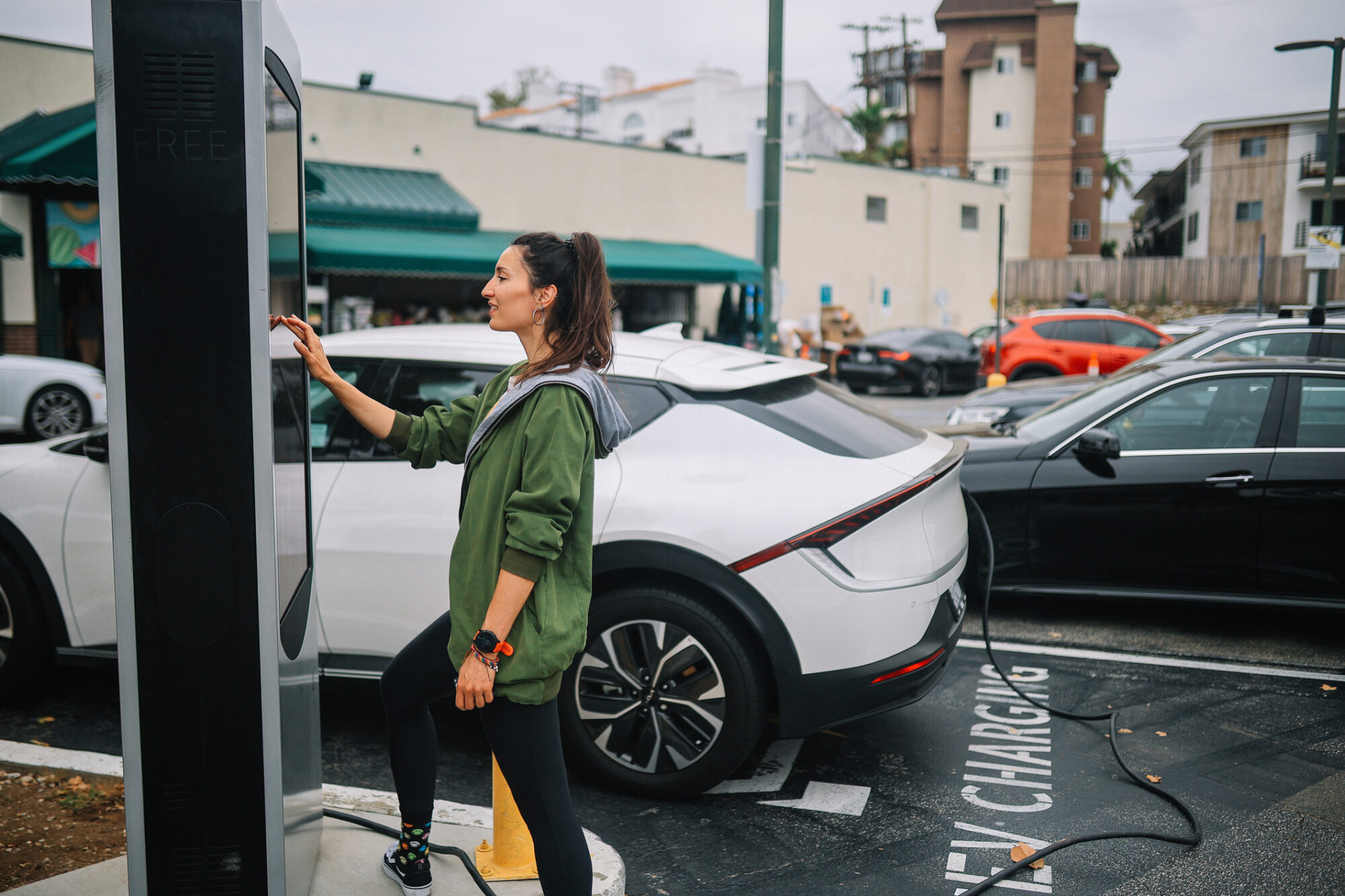
Charging infrastructure makes cheaper, cleaner vehicles a practical option for more households, businesses, and government fleets. States should build an affordability-first charging strategy that lowers the cost of installing and using chargers and ensures access reaches communities where the private market alone won’t build quickly enough.
States have several tools to expand access and lower costs, including grants, rebates, and on-bill financing. States should treat charging as eligible transportation infrastructure and integrate charger deployment into state transportation planning. Where possible, they should redirect available federal transportation dollars to charging projects.
Deployment support should target places where private investment is likely to underbuild: low-income areas, rural communities, multifamily buildings, and apartment-dense neighborhoods. States should also prioritize lower-cost daily charging—in homes, apartment buildings, workplaces, garages, and park-and-ride lots—alongside the highway fast chargers needed for longer trips and freight corridors.
Public utility commissions should also establish clear deadlines to drive faster approvals and grid connections for EV chargers and reduce complexity and compliance costs for site developers; states such as New Jersey and Colorado have developed model local ordinances to help. Multistate coordination can further reduce costs by aligning corridor planning, procurement standards, permitting criteria, and utility practices.
Abundant EV charging infrastructure makes cheaper, cleaner vehicles a practical option for more people.
1c. Modernize Building Codes for EV Readiness
Updating building codes ensures homes and commercial buildings are ready as EV adoption grows. Requiring low-cost, “EV-ready” circuitry in new construction allows property owners to install full charging equipment when they’re ready, while avoiding retrofits that can cost three times as much as designing for EV readiness up front.
1d. Utilize Measures Targeting Medium and Heavy Vehicles
With high diesel prices, affordable clean trucks are an imperative for cutting both pollution and costs. However, freight electrification presents distinct challenges that merit targeted policies. Unlike passenger EVs, commercial medium- and heavy-duty vehicles are often purchased through bulk contracts or custom-built for specific uses, making it difficult to track real price trends.
As recommended by the Northeast States for Coordinated Air Use Management (NESCAUM), and proposed in California legislation, states can leverage their clean truck incentive programs to secure relevant pricing data from vehicle manufacturers with each transaction. This data can help ensure policymakers understand the impacts of bulk purchases, regional variation, and state-specific programs on prices.
1e. Set Electricity Rates to Reward Flexible Charging and Peak-Time Grid Support
As with heat pumps, well-designed electricity rates are essential for capturing the full benefits of transportation electrification.
“By aligning charging costs with the times when electricity is cheapest, cleanest, and easiest for the grid to serve, smart rate design can lower fueling costs, reduce system peaks, and support faster electrification.”
Too often, the default rate design penalizes new charging loads, especially fast chargers and fleet depots that draw large amounts of power in short bursts. Well-designed rates can instead turn these flexible new loads into a grid asset, rewarding charging when the system has spare capacity, when clean energy is abundant, and when power is cheapest to deliver. For vehicles with bidirectional charging capability, rates should encourage discharging power to reduce grid strain and costs during peak periods.
To capture this opportunity, public utility commissions and utilities should adopt transportation electrification rates that reward off-peak charging and peak-time grid support. This can be achieved through time-varying energy rates; managed charging programs; demand charge reforms that align charges with actual grid costs; and vehicle-to-grid programs that compensate customers for verified reliability benefits. Such rate design encourages smart scheduling, on-site storage, and load management that spreads charging across off-peak windows while supporting the grid when it needs it most (See Evergreen’s energy affordability playbook for New Jersey for more on this recommendation).
State Profile: MICHIGAN
Gov. Gretchen Whitmer positioned transportation electrification as both an affordability and industrial competitiveness strategy, combining charging deployment, utility coordination, workforce development, and domestic manufacturing investment.
The results show up in ratepayers’ bills: Synapse Energy Economics found that Michigan EV drivers generated $187.8 million in cumulative net electricity system benefits from 2011 to 2024, as EV charging revenue has helped spread fixed grid costs across more customers.
State Profile: COLORADO
Under Gov. Jared Polis, Colorado became one of the nation’s leading EV markets through a comprehensive set of coordinated policies other states can replicate.
Together, these demonstrate how states can build a comprehensive electrification strategy that spans consumer incentives, charging infrastructure, utility coordination, and freight electrification.
2. Build More Housing Near Transit
As discussed above, housing and transportation costs are deeply connected. A nationwide shortage of affordable housing near public transit drives families to live far from their jobs, schools, healthcare, and recreation—and the money they save on rent or a mortgage is poured into car insurance, maintenance, fuel, and parking.
“People should not have to choose between affordable housing and affordable mobility.”
States can help reduce both costs by making it easier to build in existing neighborhoods near public transit. Transit-oriented development (TOD)—mixed-scale housing and commercial development near high-capacity transit stations and corridors—enables residents to meet more of their daily needs without relying on a car for every trip.
2a. Streamline Housing and Mixed-use Development Near Transit
States should establish expedited approval pathways for housing near major transit corridors while modernizing outdated zoning requirements that limit housing production. Transit-oriented housing can lower infrastructure costs, improve transit ridership, and strengthen local tax bases. States should require cities and counties to allow multifamily and mixed-use housing within defined station areas, with standards scaled by transit quality and distance from stations. To make such standards enforceable, states should develop a statewide TOD zoning overlay identifying TOD zones—turning the general goal of housing near transit into an enforceable standard that allows projects to proceed through ministerial approval rather than parcel-by-parcel rezonings or discretionary review.
2b. Remove Parking Mandates in High-Capacity Transit Areas
Excessive surface parking near major transit stations spreads destinations farther apart, lengthens walking routes, and weakens the pedestrian environment—a key ingredient of successful transit-oriented districts. The U.S. Department of Transportation warns that parking minimums can cause parking to consume more land than the building it serves, creating a barrier to active commuting and walkable communities. When that happens, expensive transit investments deliver less mode shift. Research from the National Research Council finds that parking maximums, rather than minimums, can complement compact development patterns that encourage transit use and pedestrian travel, yielding energy savings and emissions benefits. The Abundant, Efficient, and Affordable Homes section above covers the housing implications of parking minimums.
2c. Leverage State-owned Land for Housing By Leasing to Developers
States should inventory publicly owned land near transit and make suitable parcels available for affordable and mixed-income housing through long-term ground leases. By retaining public ownership of the land while partnering with mission-driven and private developers, states can lower development costs and require lasting affordability. Prioritizing sites near transit can cut transportation costs and reduce tailpipe pollution.
State Profile: MARYLAND
In 2026, Gov. Wes Moore signed the Maryland Transit & Housing Opportunity Act (HB 894), unlocking more than 300 acres of station-adjacent land for development. The law could support more than 7,000 new housing units and generate nearly $1.4 billion in long-term state and local tax revenue. Maryland’s TOD strategy is designed to maximize the value of major capital investments, including the Baltimore Red Line and MARC regional rail expansions. By encouraging more housing and economic activity near transit stations, the state aims to increase ridership, strengthen regional connectivity, and ensure public transportation investments generate lasting economic, mobility, and community benefits.
3. Build and Expand Modern Public Transit Systems
Strong public transit connects people to where and when they need to go, reducing reliance on cars while easing congestion, improving job access, and supporting rich, resilient local economies. States should weigh the full benefits of public transit when conducting long-term transportation planning and allocating resources. States that invest in transit are better positioned to attract employers and maintain competitive metropolitan economies by giving employees, customers, and visitors ways to move.
3a. Use Flexible Federal Funding To Fill Revenue Gaps and Establish Dedicated Funding Streams
States should use flexible Federal Highway Administration funding to support public transit systems. Programs such as the Surface Transportation Block Grant and Congestion Mitigation and Air Quality Improvement programs may be transferred to the Federal Transit Administration, where they are administered under the agency’s rules.
Transit operators rely on long-term financial stability to plan major projects that transform their regions—new rail lines, stations, bus rapid transit infrastructure, and electrified bus garages. Financial uncertainty prevents these investments from happening. States should establish reliable, dedicated funding sources for both transit operations and capital investments. Revenue options are explored in greater depth in the next section.
3b. Modernize Regional Transportation Governance
States should appoint transportation leaders who weigh the full benefits of transit in their decision-making, including congestion reduction, economic growth, and cuts to climate pollution. Governance modernization should also strengthen coordination among state DOTs, metropolitan planning organizations (MPOs), transit agencies, counties, municipalities, and housing and land-use agencies, so regional transportation plans aren’t undermined by fragmented authority or inconsistent local decisions. States can support this by giving regional bodies clearer mandates, stronger technical capacity, and leadership with transit expertise. Such reforms will improve alignment across state transportation plans, MPO plans, local land use planning, and transit agency capital and service planning.
3c. Expand Regional Rail and Intercity Bus Service
Regional and intercity transit services are particularly reliant on state leadership to get established and grow. States should study travel demand between major population centers to identify opportunities for car-alternative transit and to bridge communities. That analysis should then drive investment in coordinated rail and bus corridors with integrated schedules, routes, and first- and last-mile connections that make regional and intercity trips reliable, convenient, and competitive with driving.
State Profile: PENNSYLVANIA
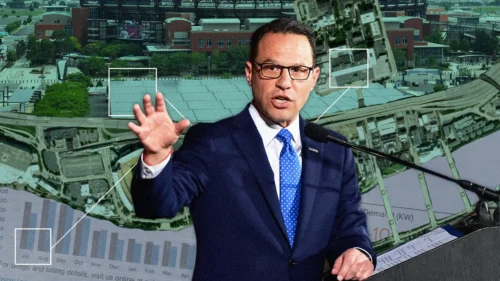
In 2024, Gov. Josh Shapiro flexed approximately $153 million in federal highway funding to the Southeastern Pennsylvania Transportation Authority (SEPTA) operations to prevent severe service cuts and fare increases. Pennsylvania’s experience demonstrates substantial flexibility states already have under existing federal transportation law to rebalance priorities toward transit—while also highlighting the growing fiscal cliff many states face as temporary federal pandemic support expires. Pennsylvania’s 2024 approach offers a strong model, but it also points to a critical limitation: without a dedicated, permanent source of operating funding, rural transit and paratransit systems remain especially vulnerable.
State Profile: ILLINOIS
In 2025, Gov. JB Pritzker signed the Northern Illinois Transit Authority Act (SB 2111), landmark legislation restructuring transit governance and raising approximately $1.5 billion annually in sustainable funding through: redirecting gas sales tax revenue to transit, raising the regional sales tax to fund transit, road fund interest transfers, and expanded tollway revenue authority. Illinois demonstrates that states can stabilize transit operations, modernize governance, and establish sustainable long-term funding while improving regional coordination and accountability.
4. Modernize Transportation Funding and Infrastructure Planning
Traditional gas-tax-based transportation funding is becoming increasingly unsustainable as vehicles become more fuel-efficient and EVs gain market share. States need more flexible, resilient funding systems that deliver the highest return on taxpayer investment. Several innovative revenue-generating policy mechanisms can provide more stable, permanent transportation funding. At the same time, there is growing evidence that road expansion is directing investment to suboptimal projects. States should prioritize maintaining existing roads and bridges over expanding roadway capacity, and use performance-based transportation system planning to target resources toward affordability, effectiveness, and equity.
4a. Establish New, Dedicated Revenue Sources To Provide Stable Funding For Transportation Projects
There are many innovative revenue-raising mechanisms that states should explore to provide more stable, permanent transportation funding for public transit, charging infrastructure, and other projects. Options include:
Retail delivery fees
States can impose fees on online retail deliveries to generate revenue for public transit. With deliveries representing a significant and growing portion of vehicles on the road, such fees can compensate states for the wear and tear on road infrastructure while creating a reliable funding stream.
Rental car fees
States can levy fees on rental cars—used primarily by tourists and business travelers.
Ride-hail fees
States can impose flat or percentage-based fees on ride-hail services like Uber and Lyft.
Road usage charges
Fees based on vehicle miles traveled, tolls, and other road pricing mechanisms reduce congestion by discouraging solo car travel while generating revenue. In some cases, these fees can fund transit along the same corridors where they’re levied. States can empower local jurisdictions to pilot road usage charges tied to selected transit investments that expand options beyond driving.
4b. Implement Performance-based Transportation System Planning
Integrated transportation system investment planning is a disciplined approach to allocating limited public transportation dollars across roads, transit, bicycle, pedestrian, freight, and demand-management projects. Rather than evaluating each mode in isolation, it compares projects against shared goals—safety, congestion relief, accessibility, economic development, environmental performance, and cost-effectiveness. In practice, agencies identify system needs, invite project proposals, screen them for eligibility and readiness, and score them using transparent, outcome-based metrics. This approach reflects the reality that transportation networks function as integrated systems, so investment decisions should account for how each project improves mobility, access, and reliability across the whole network. It also helps public officials prioritize projects that deliver the greatest public benefit per dollar while making more consistent, defensible, and accountable funding decisions.
State Profile: COLORADO
Gov. Jared Polis advanced one of the country’s most comprehensive statewide multimodal transportation strategies. Colorado established transportation-related fees, including retail delivery fees, rental car fees, and oil and gas production fees, to support an ambitious passenger rail and bus rapid transit network. The state updated its planning models to better account for how these investments affect mode choice and adopted transportation greenhouse gas planning requirements that evaluate projects based on emissions outcomes and multimodal performance.
State Profile: VIRGINIA
Virginia’s SMART SCALE program prioritizes transportation investments through transparent performance metrics, including congestion reduction, safety, accessibility, economic development, land use efficiency, and environmental outcomes. Projects across highways, transit, passenger rail, active transportation, and transportation demand management compete under the same scoring framework, helping direct funding toward higher-return investments and improving transparency in decision-making.
SMART SCALE significantly increased investment in rail, transit, bicycle, pedestrian, and multimodal projects while supporting major economic development outcomes. Virginia officials cited the state’s multimodal transportation network and TOD strategy as a factor in securing Amazon’s HQ2 investment in Northern Virginia. The program is widely recognized as a national model for data-driven transportation investment.
Conclusion: A New State-Level Affordability Agenda
States can lower costs, expand opportunity, and strengthen economic competitiveness through smarter energy, housing, and transportation policy, all while cutting climate pollution.
The states highlighted in this memo show that affordability-focused clean energy, housing, and transportation policy is already happening:
Michigan passed siting and permitting reform to streamline the approval and deployment of cheap, clean energy.
Illinois reined in utility profits, advanced performance-based standards, modernized transportation governance systems, and raised sustainable, dedicated transit revenue.
Colorado required utilities to establish virtual power plant programs, accelerated vehicle electrification and EV infrastructure deployment, and pioneered policies like multimodal transportation funding and a Clean Heat Standard.
Montana removed parking minimums, which will cut building costs and increase housing production.
North Carolina provided low-cost on-bill financing for home upgrades.
New York saved ratepayers money by requiring utilities to consider non-pipeline alternatives and upgrading building codes to support money-saving all-electric buildings.
Massachusetts lowered electricity costs for heat pump customers and implemented strong stretch codes to encourage efficient and electric buildings.
Maryland paired housing and transit reform.
Pennsylvania stabilized transit systems.
Virginia demonstrated smarter infrastructure prioritization.
This moment calls for bold action, and state leaders have an opportunity to deliver. These policies can help secure wins for consumers and our climate alike.
Acknowledgments
The authors would like to thank the following external reviewers for providing their expertise to the report: Matt Casale, Building Decarbonization Coalition, Heather Clark, Biome Studio, Jacob Corvidae, RMI, Ava Gallo, National Caucus of Environmental Legislators, Wendy Jaglom-Kurtz, RMI, Jonny Kocher, RMI, Alejandra Mejia-Cunningham, Natural Resources Defense Council, Lotte Schlegel, Schlegel Collaborative, Jenna Tatum, Building Electrification Institute, David Weiskopf, Climate Cabinet, and Ruby Wincele, Climate XChange.