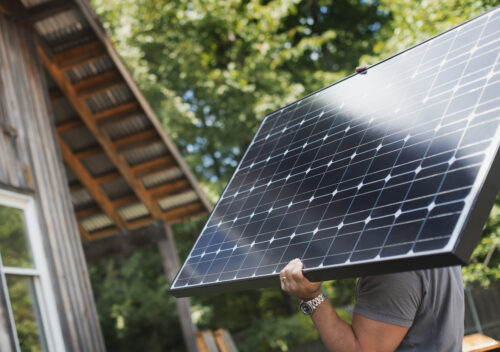
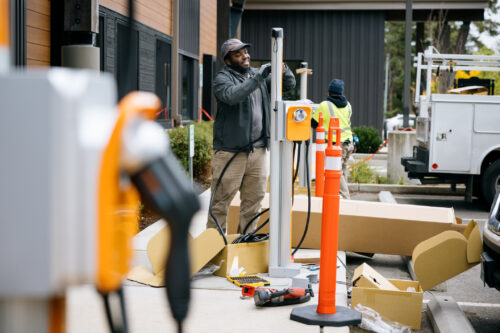
The fastest, cheapest path to lower bills runs through building more clean energy—not more gas plants. (Image: Tim Pannell for Mint Images via Getty Images)
If you’ve opened your electric bill and been caught off guard by how much you owe, you’re not alone. Three-quarters of U.S. adults say their home energy bills have gone up in recent years, according to a June Pew poll—including two in five who say their costs have gone up significantly. The numbers back that up: electricity bills spiked 10.2% nationally in the past year—up 20% in some states—and costs show no sign of easing on their own. As Big Tech builds sprawling data centers that gobble up electricity, natural gas prices stay stubbornly high, and heat waves and winter storms are more frequent and intense, American families are footing an increasingly painful bill.
State leaders can change that. They have powerful tools to deliver real relief right now, and even more powerful tools to hold costs down for the long haul. And the roadmap runs through more clean energy—not more gas plants.
Who’s Driving Your Bills Up
Three culprits are pushing electricity costs higher. And state leaders can take steps to rein in all three.
Big Tech is demanding electricity—and making everyone else pay for it.
Major tech companies are building enormous data centers across the country to power their artificial intelligence (AI) operations, which require massive amounts of electricity at once. In some places, data centers are driving down costs by increasing utilization of the system and spreading out infrastructure costs. But when data centers land in places without spare capacity on the grid, prices can spike for everyone in the region. The 13 mid-Atlantic and Midwestern states served by PJM Interconnection, the regional grid operator serving 67 million customers, host a disproportionate number of data centers and have been hit with especially high bills. Virginia alone hosts over a quarter of all U.S. hyperscale data centers—and electricity rates in nearby Washington, D.C., rose 37.8% in just two years as a result. Americans are taking note: the same Pew poll found that two-thirds of U.S. adults who say their energy bills have gone up blame data centers using more energy—and 43% call it a major reason.
Monopoly utilities are pocketing record profits while families struggle.
On average, 15 cents of every dollar households pay on their electric bills goes directly to utility profit margins—regardless of how the utility actually performs. In other industries, companies earn more by doing better. Monopoly utilities earn more by spending more. That’s a broken incentive structure, and families are paying for it. They know it, too: Pew found that 85% of U.S. adults cite utilities wanting to make more money as a reason their energy bills have gone up, with nearly two-thirds calling it a major reason.
Overreliance on natural gas is leaving customers exposed.
High and volatile natural gas prices are among the leading causes of skyrocketing energy bills. Unlike solar or wind, natural gas is a commodity whose price moves with global markets. When supply tightens due to geopolitical instability, a brutal cold snap, or rising overseas demand, prices can spike quickly—and customers’ bills spike with them. Utilities can pass fuel costs directly to customers, giving utilities little incentive to move away from gas. Building more gas plants now would only deepen that exposure.
Image: O2O Creative via Getty Images
What States Can Do Now
States have proven tools at their disposal to bring bills down, including some specific, common-sense steps policymakers can take to deliver savings right away:
Make data centers pay for the costs they create.
Many states have responded to data centers by creating large load tariffs—utility rates designed specifically for data centers and other high-demand users. Done right, these tariffs hold data centers responsible for all the grid costs they impose, so other customers don’t end up subsidizing Big Tech. Long-term contract requirements and exit fees ensure that customers aren’t left on the hook if a data center shuts down early. At least 37 states have already approved or are considering large load tariffs.
Oregon is a leading example. Last year, it passed the POWER Act, creating a separate rate class for large energy users and requiring data centers to sign contracts of at least 10 years. State regulators are now considering a proposal to raise data center rates by 29%—while cutting rates for everyone else. The legislation also encourages data centers to power their operations with clean energy.
Specially designed utility rates alone aren’t enough, though, because they don’t address the cost of generating electricity in the first place. Some states and regions are going further and requiring data centers to “bring your own new clean energy,” or BYONCE. Rather than drawing lower-cost power from the existing grid, data centers must secure their own energy supply. This prevents them from diverting existing power and making other customers pay more to replace it.
That new energy must also be clean—so data centers don’t simply trigger the construction of new, expensive, polluting gas plants. States that offer tax incentives for data centers should consider conditioning those credits on BYONCE requirements. Polling shows that net local approval of data centers jumps from -9% to +31% when they use clean energy, revealing that voters care deeply about how they are powered.
States can also require data centers to dial back their energy use during peak hours—the times when everyone is using the most electricity and the grid is under the most strain. Data centers don’t always need to run at full power, and when major operators build in that kind of flexibility, it reduces the need for expensive new infrastructure to handle demand spikes. Data centers could even draw energy from battery storage during these hours if they don’t want to turn off. Researchers estimate that widespread data center flexibility could avoid $40 to $150 billion in infrastructure costs over the next decade—savings that would ultimately flow back to customers.
“Rather than drawing lower-cost power from the existing grid, data centers must secure their own energy supply. This prevents them from diverting existing power and making other customers pay more to replace it.”
Rein in monopoly utility profits.
Your electricity bill doesn’t just cover the cost of power—it also includes a guaranteed return on investment for the utility’s shareholders for every dollar of capital spent. And the more infrastructure a utility builds—the poles, wires, and equipment needed to deliver electricity—the more profit it can earn. This creates an incentive to keep building and spending, regardless of whether customers actually need more infrastructure or whether cheaper alternatives exist.
State regulators can change this. Reducing the guaranteed rate of return utilities earn by just two percentage points, for example—say, from 10% to 8%—could lower the average household’s annual electricity bill by roughly $100. Illinois is leading the way in going after exorbitant profits, setting guaranteed utility profit levels at some of the lowest levels in the country while tying those returns to actual performance.
Expand bill assistance programs—and make them easier to access.
Low- and moderate-income families pay a much larger share of their income on electricity than wealthier households, so rate increases hit them hardest. Bill assistance programs exist to help—but they’re often significantly underused. States can boost participation by automatically enrolling eligible households and expanding outreach efforts. These programs often pay for themselves and reduce costs for all customers, not just those who receive assistance directly.
A word of caution: some short-term relief measures can raise long-term costs. States that have cut energy efficiency or clean energy programs to save money up front are actually spending more in the long run because those investments help avoid costly grid upgrades and new power plants down the road. Real relief can’t come at the expense of the tools that keep costs down over time.
The Long Game: Build Cheap, Clean Energy Fast
Near-term relief matters, but the root causes of high electricity costs require deeper fixes—and clean energy is at the center of all of them.
Solar, wind, and batteries are the cheapest new power available.
We need new power. And renewables are now the cheapest and fastest-to-build sources of new electricity generation, costing less to build than new natural gas or coal plants in most cases—and in a fraction of the time. States that speed up siting and permitting for clean energy projects and make it easier for rooftop solar to connect to the grid will be able to meet rising demand without passing steep new costs on to customers. That includes pushing regional grid operators like PJM Interconnection to move faster on approving thousands of clean energy projects currently stuck waiting in line to connect to the electric grid—a process that can take up to five years.
Fix the broken rules that steer utilities toward expensive choices.
Under the current system, utilities earn more by building expensive new infrastructure than by getting more out of what already exists. States are uniquely positioned to fix this through performance-based regulation—tying utility revenue to actual outcomes like reliability, cost containment, and pollution reduction, rather than how much they spend. At least 17 state legislatures and D.C. have already authorized some version of this approach.
Other underused tools include advanced transmission technologies, or ATTs—software and high-performance hardware upgrades that allow more electricity to flow through existing power lines without building new ones. Colorado passed a law earlier this year requiring utilities to factor ATTs into their long-term transmission plans, and at least 18 states have passed ATT mandates or incentives. More should follow.
Let households help power the grid—and get paid for it.
Virtual power plants, or VPPs, work by coordinating home batteries, rooftop solar panels, and smart appliances across many households so they can function together as a single power source when the grid needs it most. These resources already exist but are underused. Instead of a utility building a new power plant to handle peak demand, it can draw on the distributed resources already in people’s homes—and pay those households for their contribution. Colorado’s VPP law, passed in 2024, requires utilities to compensate customers who send power back to the grid or reduce demand during peak hours, turning everyday home energy into a community resource.
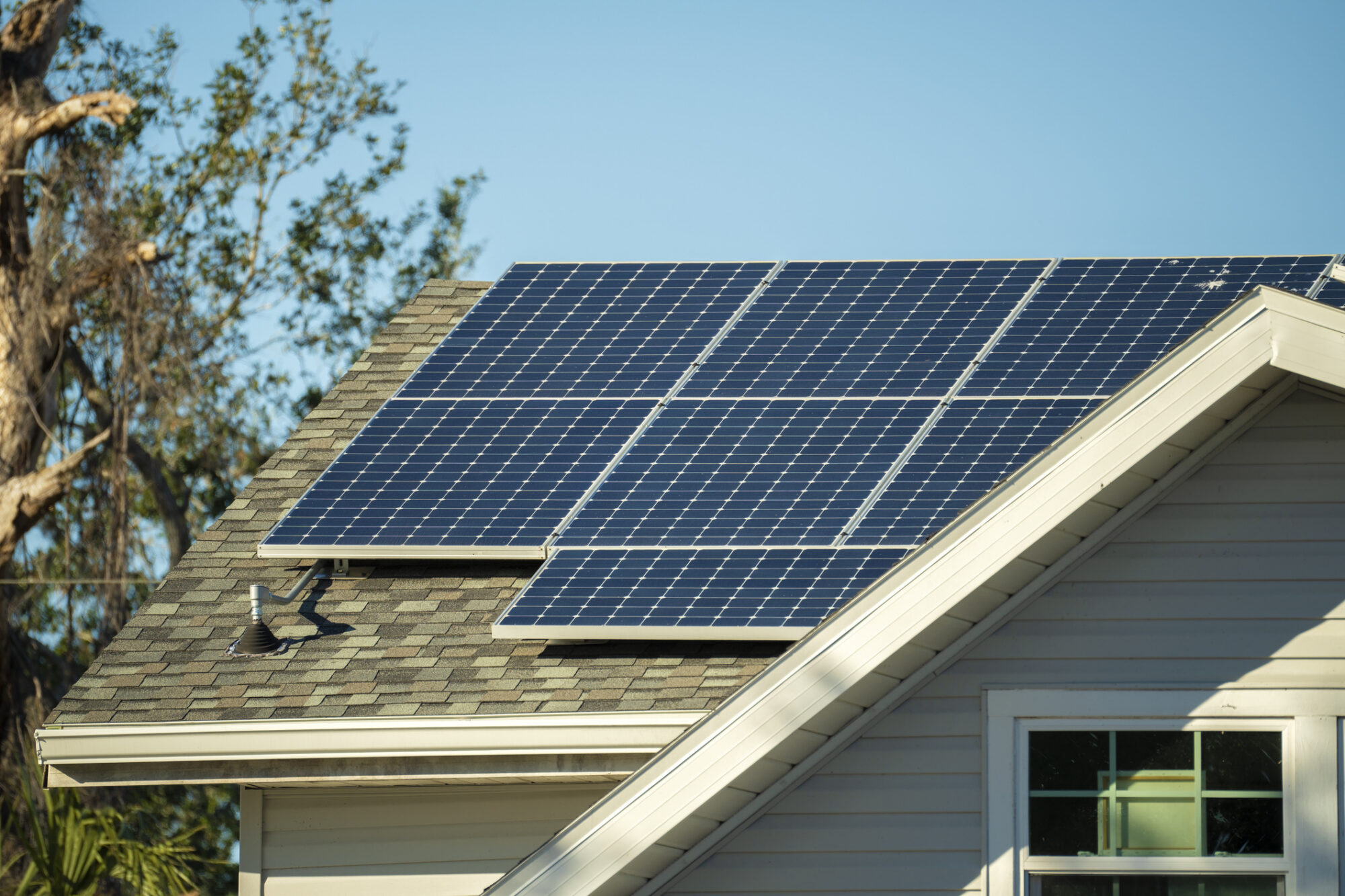
By requiring utilities to compensate customers who send power back to the grid or reduce demand during peak hours, everyday home energy generated via solar panels can also become a community resource. (Image: Bilanol via Getty Images)
The Bottom Line
Rising electricity bills aren’t inevitable. They’re the product of state policy choices that can be changed. Data centers should pay for the grid costs they impose on everyone else. Utility profits should be tied to performance, not spending. And the fastest, cheapest path to lower bills runs through clean energy, not more gas plants.
State leaders who act on these opportunities don’t have to choose between economic relief and a cleaner grid. They can deliver both.
Get more information
Read more about this topic in our more comprehensive memo outlining critical opportunities for state-level decision-makers—including legislators, governors, and regulators—to advance smart policies that deliver economic relief and address climate change through cheap, clean power, efficient buildings, and affordable, accessible transportation.